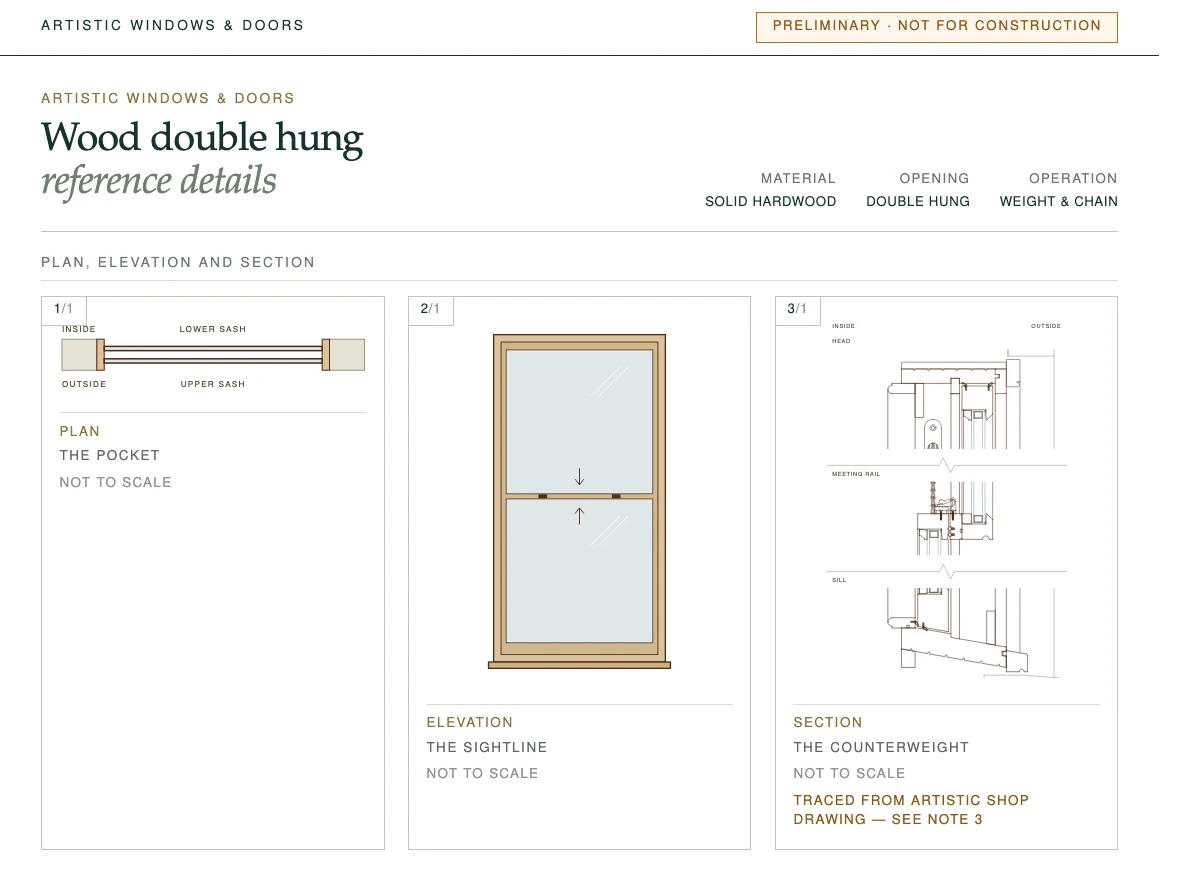
The pocket
A weight pocket needs depth in the jamb. Where the wall cannot give it, the concealed-balance version carries the same sightlines.
Wood / Double hung, weight & chain
A true weight-and-chain double hung: each sash carried on chain over a pulley to a counterweight concealed in the box frame. It is the original sash mechanism. Landmark reviews often require it.
See the drawing setDiscuss this opening
Specification
The sash is drawn to the opening. The pocket and the balance are what the mechanism needs in return.
Configurations
Four decisions that change the drawing, each set on its own. These drawings show the layout only.
Units
A single unit in the opening.
Sashes
Both sashes run, meeting at the rail.
Head shape
A flat head, level with the lintel.
Glazing
Undivided glass.
ASection A–A: head to sillBSection B–B: the jamb, in planTap a letter to see that section.
Illustrative elevation. Nominal geometry, not to scale.
Design considerations
Weight-and-chain is specified where the existing box frame is being matched, where a landmark review requires the original operation, or where a sash is simply too tall and heavy for a jamb balance to carry well.
A weight pocket needs depth in the jamb. Where the wall cannot give it, the concealed-balance version carries the same sightlines.
Built to the exact sightlines of the opening, with no filler panel anywhere in it. Meeting rail, stile and muntin widths are drawn to match what is already in the building.
Each sash runs on chain over a pulley to its own weight in the box frame. The sash is balanced through the whole travel, so a tall unit stays where it is put without a catch.
For the project teamSent on request
Our section for this opening, with the box frame, the pocket and the meeting rail in it.
A reference set for early design. We prepare shop drawings for your project once it is underway.
Questions
Each sash is carried on chain over a pulley to a counterweight concealed in the box frame. It is the original sash mechanism, and landmark reviews often require it.
A weight pocket needs depth in the jamb. Where the wall cannot give it, the concealed balance version carries the same sightlines.
Yes. Weight and chain is specified where the existing box frame is being matched. Meeting rail, stile and muntin widths are drawn to match what is already in the building.
More in wood