The light
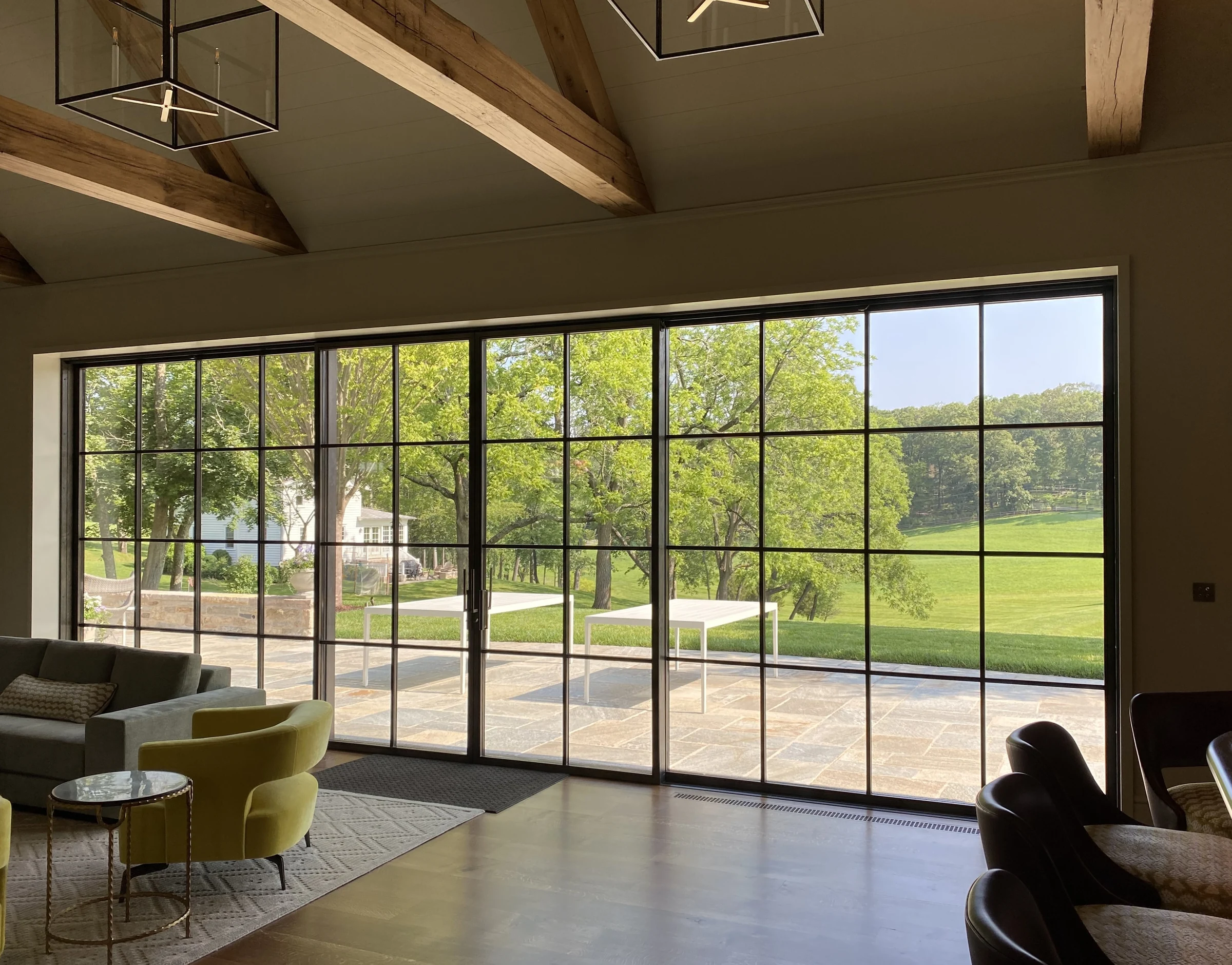
Nothing in a fixed light has to move, so the frame stays tight and the glass takes over.
Steel & brass / Fixed lights
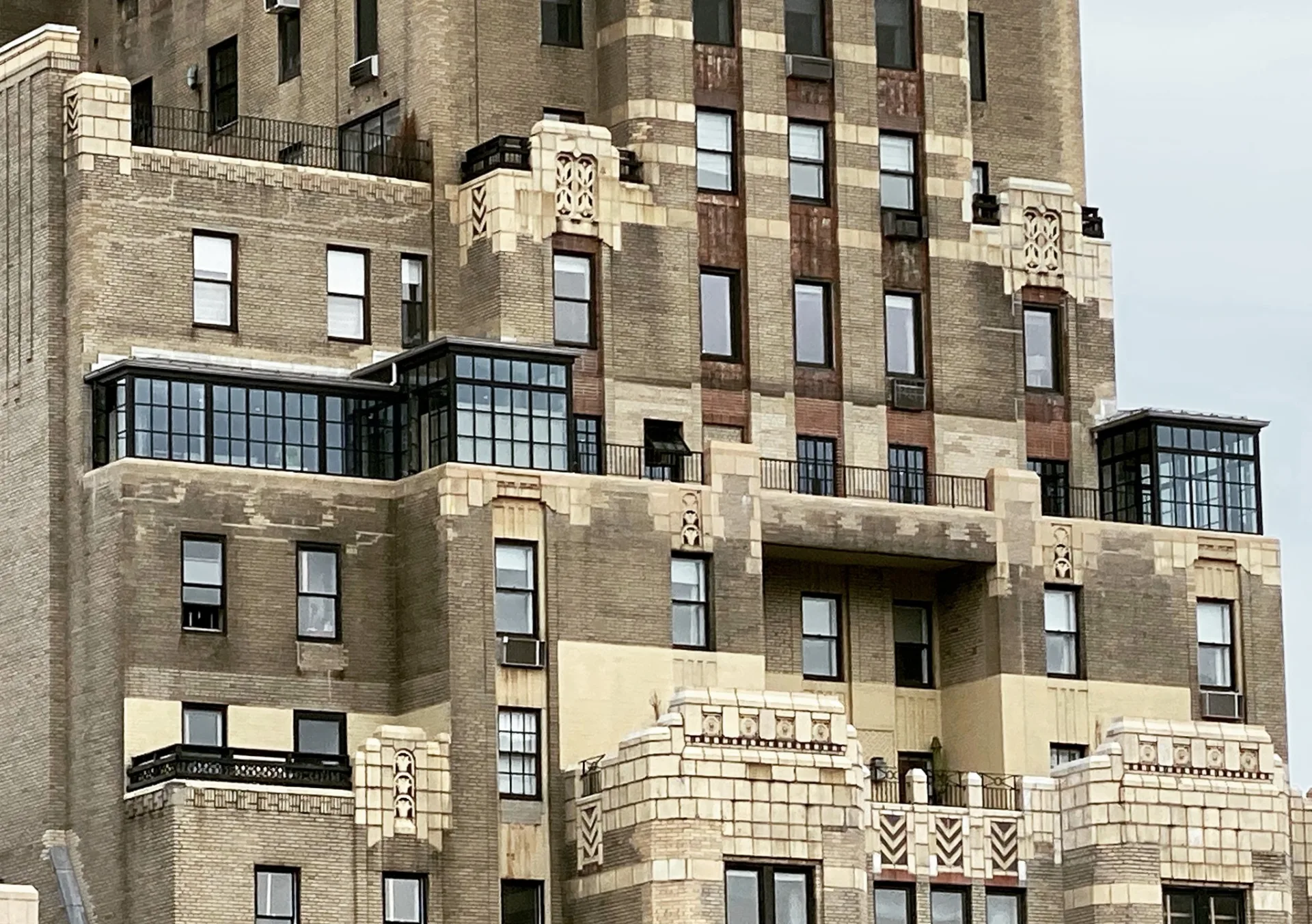
A fixed light has no sash, no hardware and no hinge, because nothing in it has to move. So the frame stays tight and the glass takes over: more glass and less metal around it, for grander openings and longer views. Artistic builds glass sizes most makers cannot reach: a single arched fixed light can take one sheet of glass that runs 20 to 30 feet. Ask early if the opening is large.
Discuss this openingSee the drawing set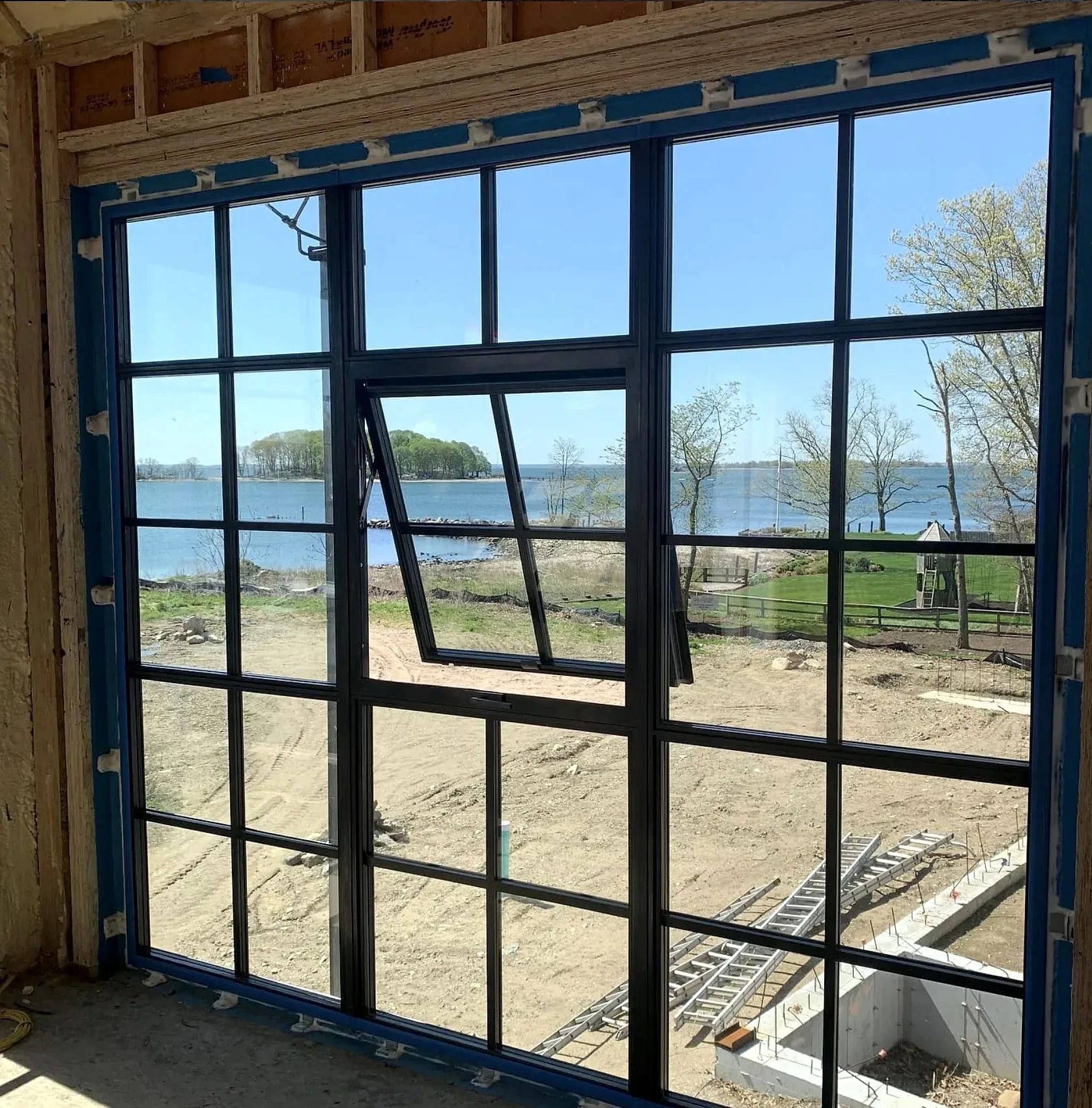
Specification
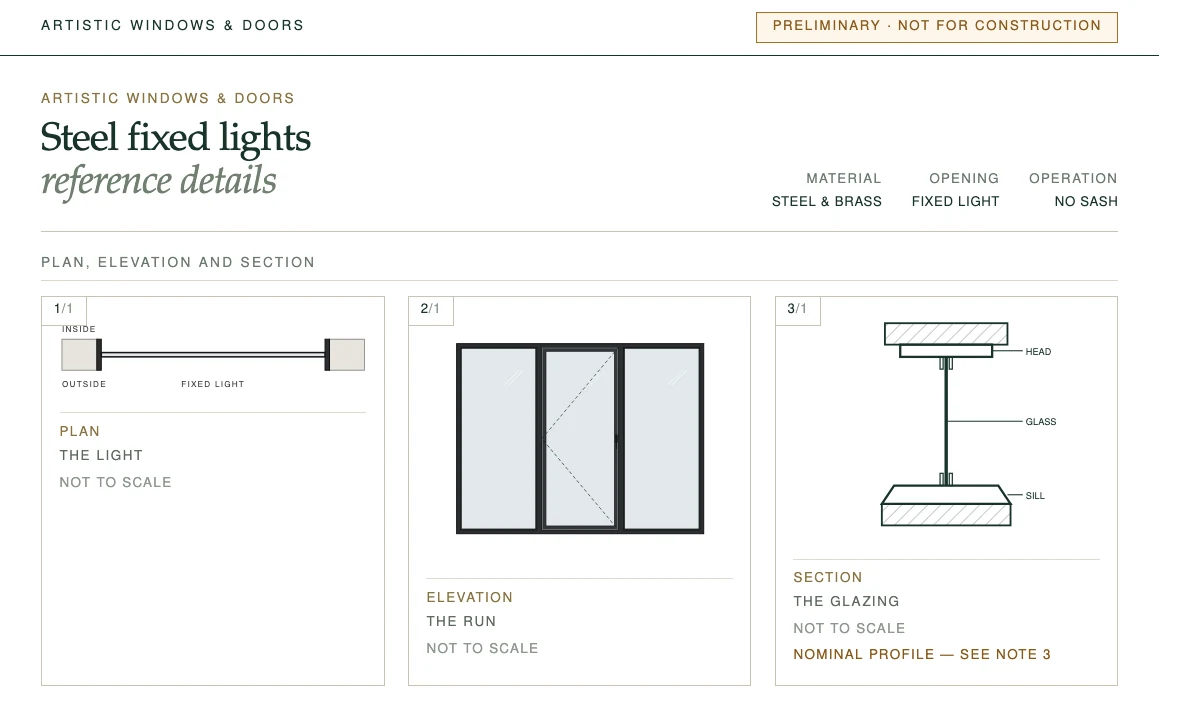
The light is drawn to its opening, in the same section as the windows beside it.
Configurations
Three decisions that change the drawing, each set on its own. These drawings show the layout only.
Composition
One light in the opening.
Head shape
A flat head, level with the lintel.
Glazing
Undivided glass.
Illustrative elevation. Nominal geometry, not to scale.
Design considerations
Fixed lights carry the spans that no hardware would, and fill the parts of a composition that exist to be looked through. On most elevations they sit beside casements or tilt and turns.
Nothing in a fixed light has to move, so the frame stays tight and the glass takes over.
Drawn to the same bar and shadow line as the windows beside it, so the run reads as one window. One of them opens.
A fixed light has no sash, no hardware and no hinge, so the glass sits in the frame itself.
For the project teamSent on request
Our section for this opening, with the sash beside it in the run.
A reference set for early design. We prepare shop drawings for your project once it is underway.
Questions
A window with no sash, no hardware and no hinge, because nothing in it has to move. The frame stays tight and the glass takes over.
A single arched fixed light can take one sheet of glass that runs 20 to 30 feet. Ask early if the opening is large.
Yes. It is drawn to the same bar and shadow line as the windows beside it, so the run reads as one window.
More in steel