The balance
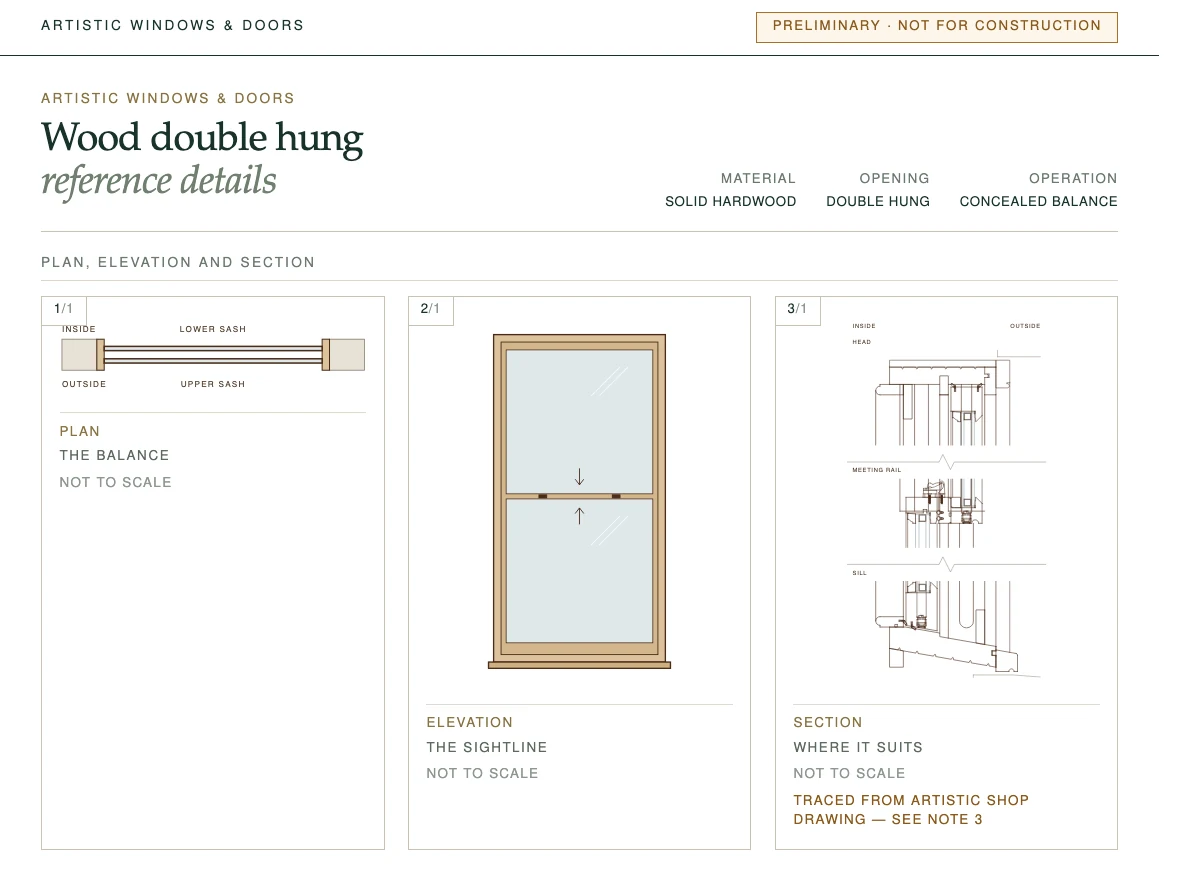
The counterbalance sits in the jamb alongside the sash, so the frame needs no weight pocket and the wall keeps its insulation continuous.
Wood / Double hung, concealed balance
A double hung with the balance hidden in the jamb. It keeps the look of a traditional sash where the wall has no room for a weight pocket: new construction, insulated walls, or a tight existing opening.
See the drawing setDiscuss this opening
Specification
The sash is drawn to the opening, with the balance hidden in the jamb.
Configurations
Four decisions that change the drawing, each set on its own. These drawings show the layout only.
Units
A single unit in the opening.
Sashes
Both sashes run, meeting at the rail.
Head shape
A flat head, level with the lintel.
Glazing
Undivided glass.
ASection A–A: head to sillBSection B–B: the jamb, in planTap a letter to see that section.
Illustrative elevation. Nominal geometry, not to scale.
Design considerations
Specified where the sightline matters but the box frame cannot be accommodated, and where a deeper insulated wall assembly leaves no room for a weight pocket.
The counterbalance sits in the jamb alongside the sash, so the frame needs no weight pocket and the wall keeps its insulation continuous.
Meeting rail and stile widths are drawn to the same dimensions as the weight-and-chain units, so the two can sit in one elevation without reading as different windows.
New construction and deep retrofit assemblies. Where a landmark review requires the original operation, the weight-and-chain system is the one to specify.
For the project teamSent on request
Our section for this opening, with the jamb carrying the balance and the meeting rail in it.
A reference set for early design. We prepare shop drawings for your project once it is underway.
Questions
A double hung with the balance hidden in the jamb. It keeps the look of a traditional sash where the wall has no room for a weight pocket.
New construction and deep retrofit assemblies. Where a landmark review requires the original operation, the weight and chain system is the one to specify.
Meeting rail and stile widths are drawn to the same dimensions as the weight and chain units, so the two can sit in one elevation without reading as different windows.
More in wood